

A Storied Life: Tabitha is a cozy narrative puzzle game about clearing out an elderly loved one’s country house, packing their belongings into a single box per room, and using the words those items unlock to fill in the gaps of their damaged memoir. Think Unpacking meets A Little to the Left with a gentle splash of Mad Libs.
Not just a puzzle game, A Storied Life: Tabitha takes a look at the harder emotional work of dealing with grief, death and moving on. Clearing out a loved one’s home is rarely the soft, montage-ready affair that games like to show us. In real life, it’s slower. Quieter in some ways, heavier in others. There’s dust, and difficult decisions, and the strange weight of holding someone’s favourite teacup. The game lets you sit with these emotions, letting you take your time to explore deeper feelings. It hands you a box of packing supplies and a half-finished memoir, and trusts you to figure out what kind of story feels right.
It takes about 90 minutes to two hours for a first playthrough, encourages replays to discover different narrative threads, and lands somewhere between heartfelt and pleasantly weird. It’s a sweet little moment in time that stays with you after you’ve ended your journey.
Packing And Unpacking A Life Lived
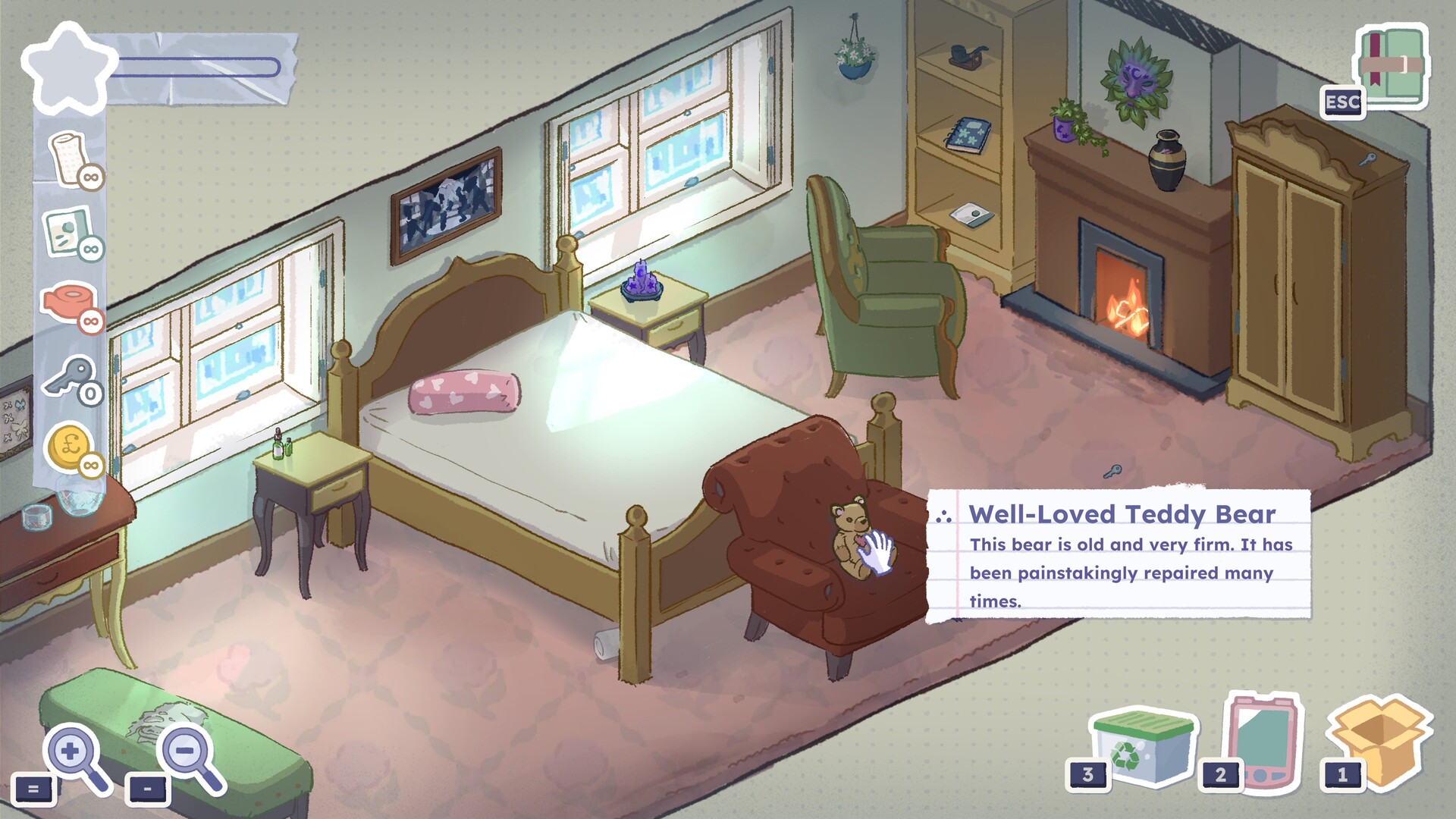
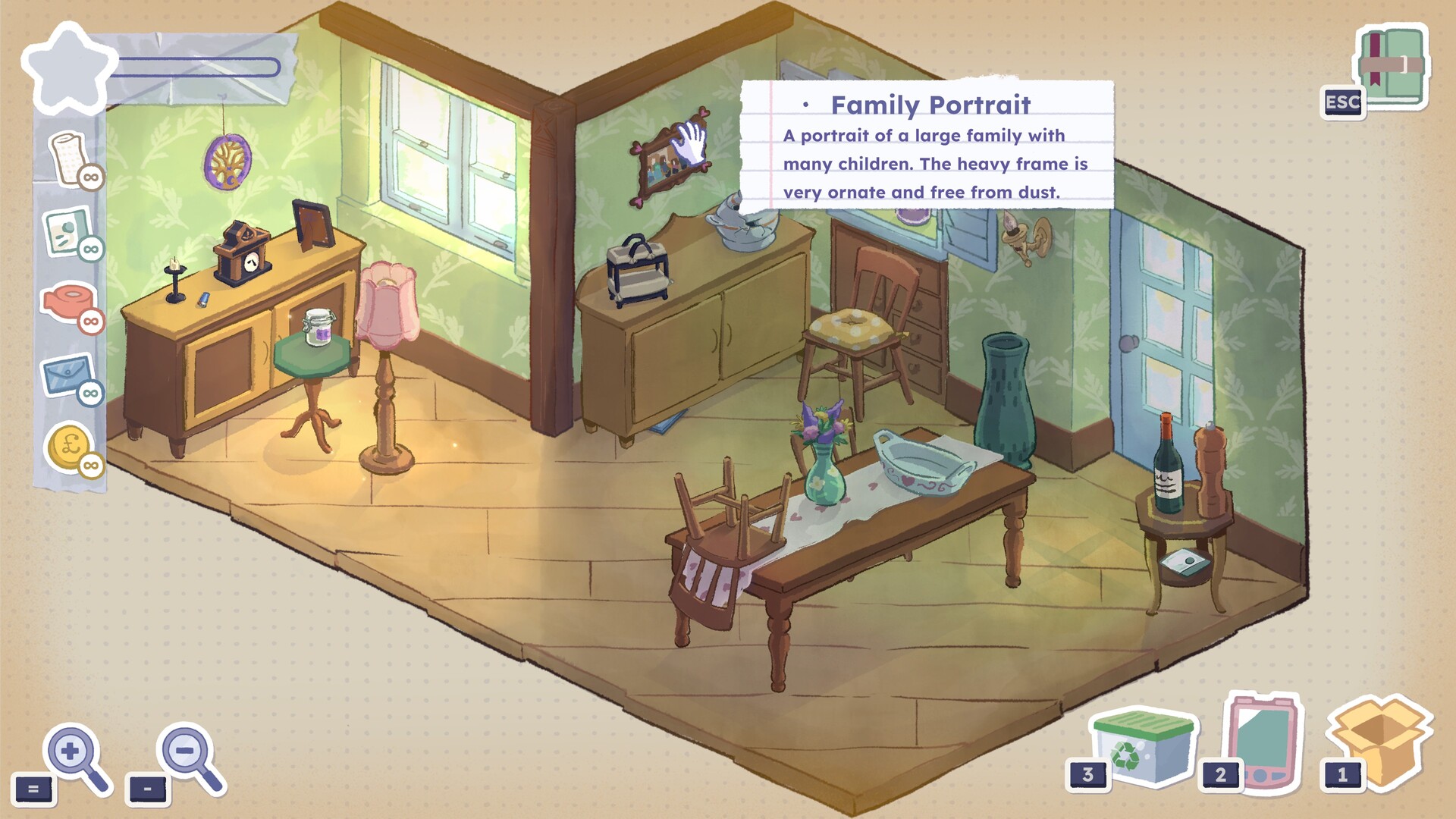
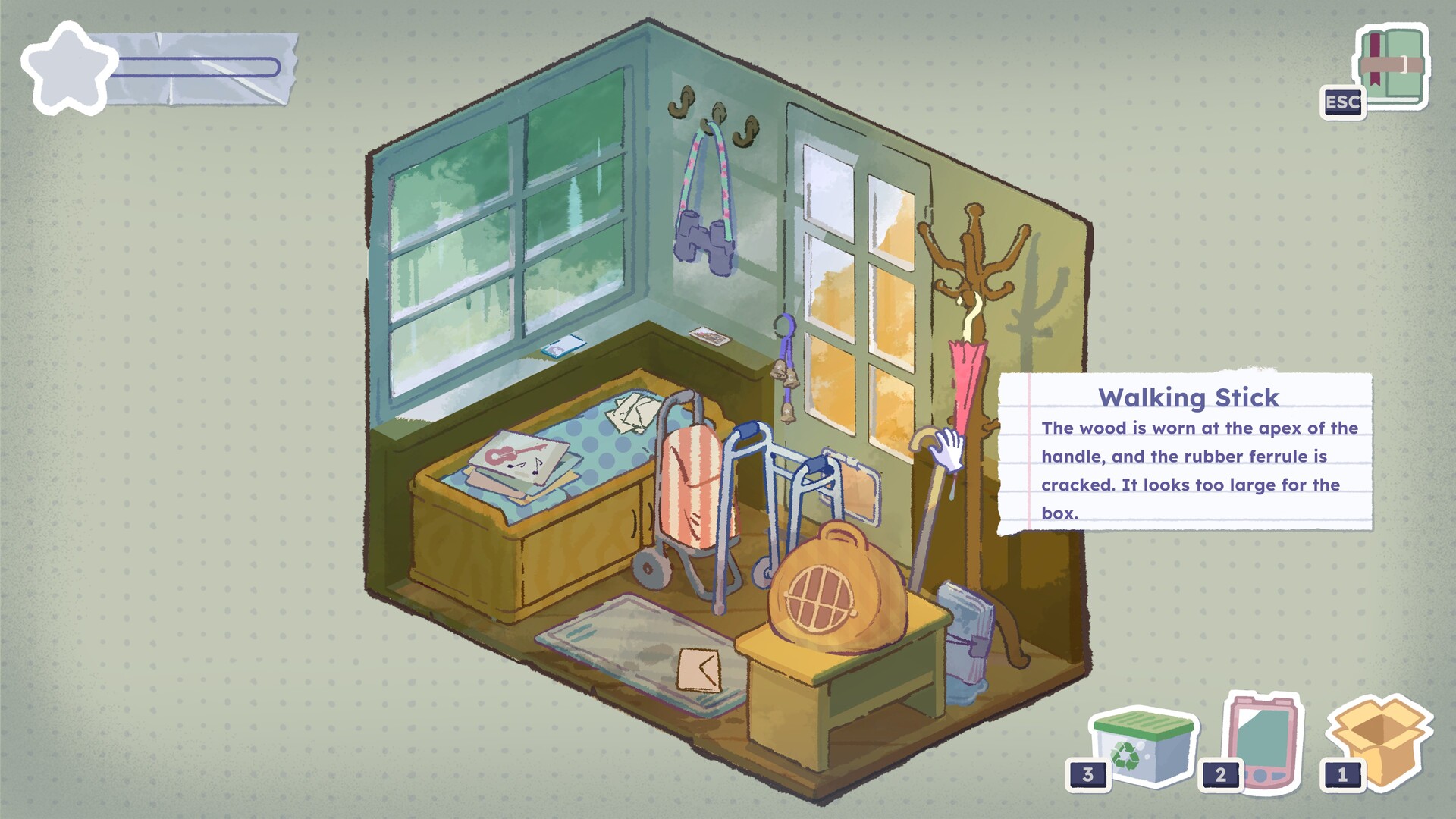
Each of the 17 hand-painted levels feels like a small diorama of a life lived. You click on things. Open cupboards. Lift rugs. Find keys tucked inside books. It’s the same satisfying digital exploration that Unpacking did so well, but in reverse. You’re not placing things into a new home. You’re deciding what gets to leave the old one.
The art is hand-painted, softly animated, with gentle weather effects and shifting light that make the cottage feel genuinely lived-in. The soundtrack leans on classical comforts—Greensleeves, William Tell—the kind of music that makes you want to slow down.
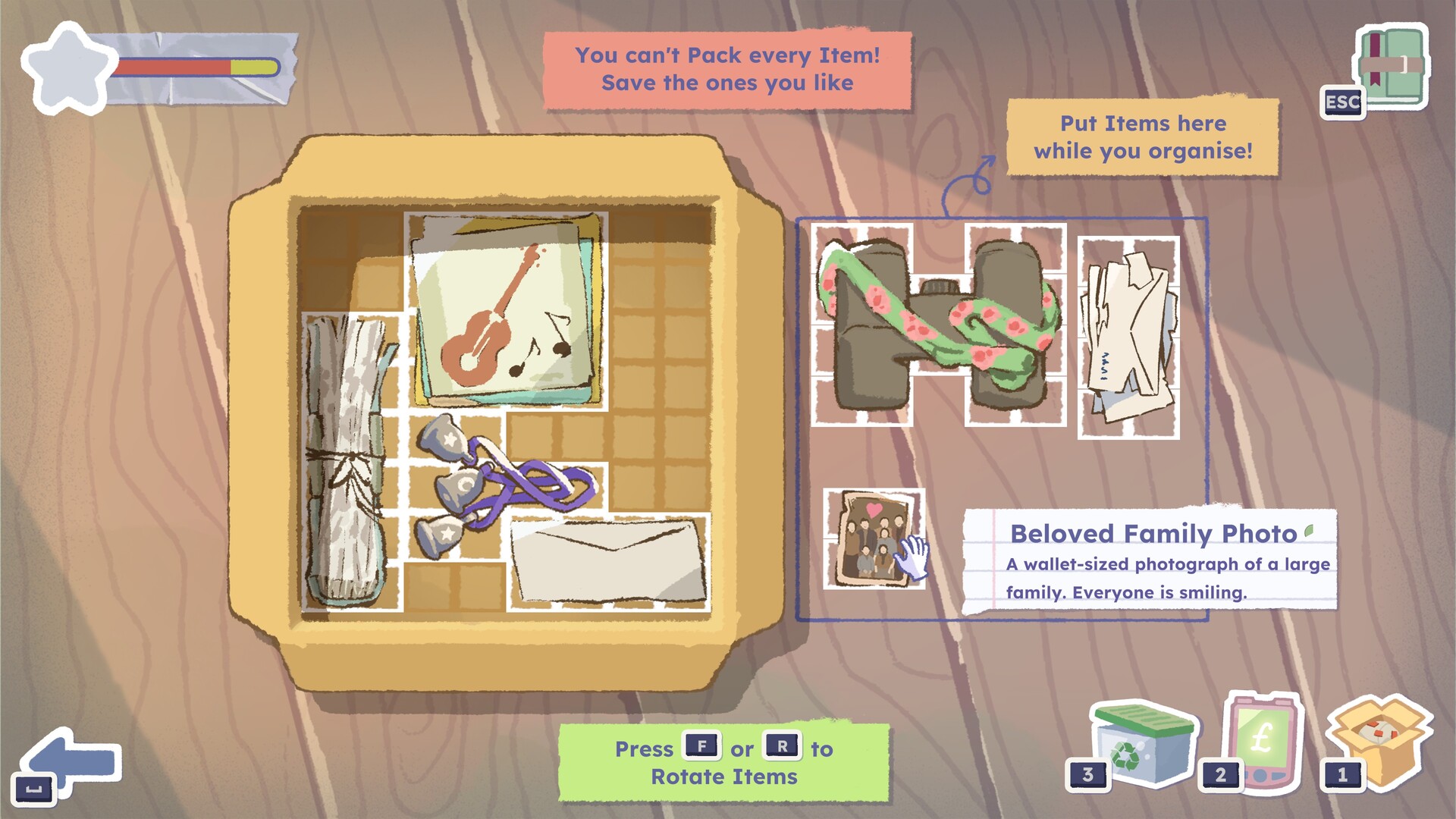
The box is your only companion. One cardboard box per room. That’s it. And it uses a grid-based system, the kind where you might rotate a teapot three times just to save one little square. Want to keep both the antique mirror and the stack of love letters? You’ll need to be thoughtful about it.
A few small touches make the packing feel kinder:
- Bubble wrap protects fragile things. Break an item, and you unlock broken object words instead of pristine ones. Both have their own feeling.
- Vacuum packing gently squishes soft goods like blankets and jumpers.
- Tape reinforces heavier boxes so they don’t burst.
- Foldable objects like letters can be tucked into envelopes to save space.
You can also auction one item per room to raise a little spending money, or recycle the things that truly feel like junk. Even cat poop is recyclable. (You can keep the cat poop. The game won’t stop you. But maybe don’t. One thing the game does well, though, is showing that letting go means you can’t keep everything. That’s not a failure. That’s the point. Every item you leave behind is a small goodbye, and the game trusts you to decide which goodbyes matter most.
That’s a fair observation. The box is snug. But that snugness is intentional. It asks a gentle question, over and over: What actually matters here?
A Memoir To Tabitha
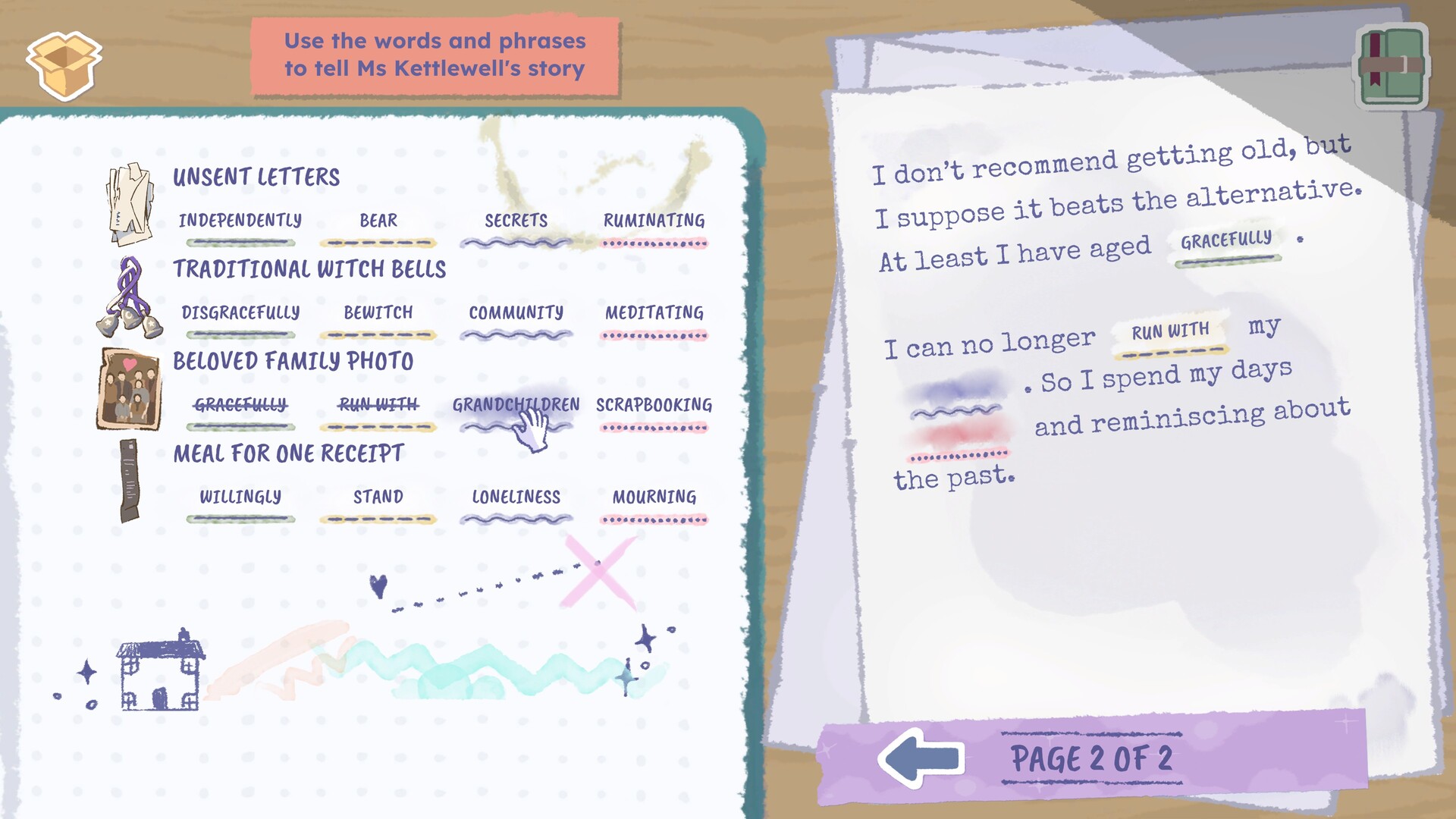
A Storied Life: Tabitha begins with you finding the recently deceased Tabitha’s nearly-finished memoir. Water damage has smudged key passages. So instead of just packing up china and old photo albums, you find yourself filling in the gaps. The items you choose to keep unlock words. Those words fill the blanks. Mad Libs style, but with a much softer heart.
Each item you save unlocks a handful of words—nouns, verbs, adjectives, the occasional surprise. You drag those words into the blanks. And here’s where something lovely happens. Tabitha becomes whoever you decide she is. How she’s remembered is up to you. Was she a caring mother? A budding botanist? A dabbler in the arcane arts?

In one playthrough, she’s a devoted gardener whose husband was never around for the children’s laboratory (yes, grammatical wobbles can happen, and that’s okay). In another, she’s a quiet occult enthusiast with curious wall hangings. In a third? A woman with a hammer and a story she never told.
The game gently nudges you toward six main narrative paths using small visual symbols on items — hearts for The Lover, cracked things for mourning, and little plants for The Horticulturist. Follow the symbols, and your memoir starts to feel cohesive. Ignore them, and you get something more chaotic. You can write a coherent narrative to please the publisher, or use a jumble of mismatched words to write something a little more avant-garde. Both are valid.
The game quietly reframes itself: you’re not uncovering a single truth. You’re writing *a* truth. Multiple endings. Multiple lives lived. Tabitha’s life is now your story to tell. It becomes strangely freeing once you stop trying to get it “right.”
Replayability
A Storied Life: Tabitha is on the shorter side. Ninety minutes to two hours for a first visit. But the game invites you back. You can return to Tabitha’s home multiple times to rewrite her story and find new facets to her life.
Each new playthrough can chase a different thread. Your journal tracks collected items, auction funds, and unlocked words. Replaying a room lets you pack differently, follow different symbols, and discover endings you didn’t see the first time. Search every nook and cranny for hidden items and intriguing easter eggs. Or recycle everything and take nothing of Tabitha’s life with you. There are many choices to be made, and no right or wrong answers — only the memories you choose to keep.
A small drawback: replaying means revisiting the same packing puzzles. You’ll know where things are hidden. You might find yourself moving on autopilot through rooms you’ve seen before. A “quick pack” option for repeat runs would have been a kind addition.
A small delight: there are secrets tucked into the corners. Unexpected little surprises. I won’t spoil them, but it’s worth moving furniture twice. Tabitha’s house has more stories than the memoir lets on.
A Storied Life: Tabitha
A Storied Life: Tabitha is a small game, but it brims with warmth. It is a clever, quietly messy game about the stories we leave behind in our junk drawers and keepsake boxes. It trusts that grief is complicated. That memory is flexible. That sometimes the most truthful thing you can write about someone is that they loved their husband, who was never quite there for the children’s laboratory.
This one’s worth a look if you loved Unpacking but found yourself wishing for more narrative branching — or if you enjoy word puzzles that let you play a little without punishing you for it. It’s also a good fit if you want a game that acknowledges loss honestly but doesn’t lean too hard into sorrow, or if you like the idea of revisiting a story just to see what changes when you keep the mysterious key instead of the old photograph.
Score: 3.9/5
Platforms: PC
Release Date: April 14th 2026

