

Finding Polka is a gentle, hand-drawn Hidden Object Adventure that feels like a beloved sketchbook has sprung to life — and that’s because it literally has. Developed and drawn by solo creator Shinnosuke Kumazawa, every single scene was drawn with a ballpoint pen on physical paper. A labour of love born from Kumazawa’s grief over losing his own French bulldog, who inspired the game’s titular pup. The result is a whimsical and often hilariously bizarre hunt for a missing dog that invites you to get lost in its world. But is this charming indie title more than just a pretty face? Let’s dive into our Finding Polka review.
The Story: A Tale of Memory and Mischief

Play as Frendy, a young woman enjoying a peaceful stroll with her dachshund, Jazz. Their quiet day is upended when they spot a mischievous French Bulldog who is the spitting image of Polka, Frendy’s childhood dog. Before they can even process it, Frendy and Jazz are off on a wild chase that quickly spirals out of control.
What starts as a simple pursuit through city streets soon becomes an odyssey that’s equal parts sweet and surreal. The story explores themes of loss, memory, and the unbreakable bond between a person and their dog. But don’t let the cozy setup fool you; this adventure goes to some truly unhinged places.

One moment you’re navigating a busy market, and the next, you’re in a Galaga-style space shooter or befriending aliens on the moon. It’s this unpredictable, playful nature that makes the journey so endearing. The game tells its entire story without a single line of dialogue, relying on expressive character animations, sound effects, and gestures to convey emotion. It’s a remarkably effective approach that makes the characters feel universally relatable.
Gameplay: A Walk in a Wimmelbook

So, how does it actually play? Think of Finding Polka as an interactive Where’s Waldo? book, but you’re walking through the pages. The core gameplay loop is a mix of exploration, observation, and simple puzzle-solving.
Exploring the Hand-Drawn World
The game is primarily a “walking simulator” where your goal is to find Polka and figure out how to get to him. Each level is a self-contained, maze-like environment packed with incredible detail. To progress, you’ll need to find paths, solve simple environmental puzzles, or complete fetch quests for the quirky inhabitants you meet along the way. Whether it’s finding a lost key for a neighbour or retrieving an item for a hungry giraffe, these tasks are straightforward and rarely require much backtracking.
Making Friends and Playing Games

A key part of the experience is the cast of eccentric characters you’ll encounter. By helping them out, you’ll often receive a charming high-five, and they’ll become a friend who can help you later on. This system cleverly makes the world feel alive and interconnected, turning seemingly pointless side quests into something more meaningful.
Scattered throughout the adventure are a plethora of short, optional mini-games that provide a delightful change of pace. You can take a break from the main chase to play a round of whack-a-mole, try your hand at putt-putt golf, or engage in some boat racing. They are simple, forgiving, and impossible to fail, perfectly fitting the game’s relaxed, approachable vibe.
Visuals and Sound: A Masterpiece in Ballpoint Pen
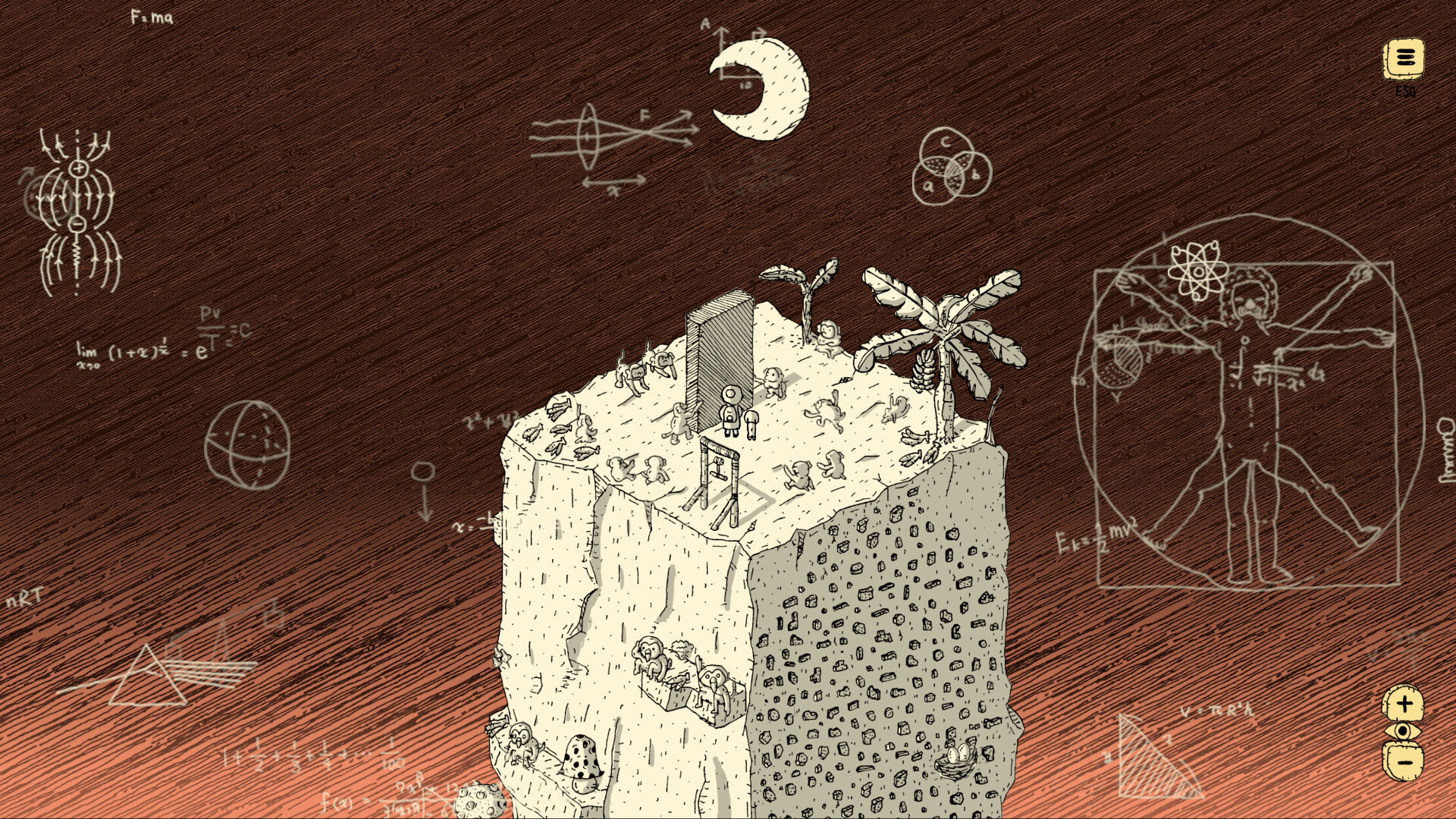
It’s impossible to talk about Finding Polka without praising its visuals. The game’s art style is its crowning achievement. Every single screen is a hand-drawn illustration, created with a simple ballpoint pen on over 400 sheets of A4 and B4 paper. The result is a stunning, textured world that feels wonderfully tactile and unique. The monochrome style is occasionally broken by psychedelic bursts of colour, adding to the game’s unpredictable, dreamlike quality. The sound design perfectly complements the art, with a diverse and beautiful soundtrack and expressive sound effects that bring the silent characters to life.
The Minor Missteps

While the journey is mostly a joy, there are a few minor frustrations. The game’s “pixel-hunting” aspects can occasionally be a bit obtuse. Since interactive objects are visually distinct (painted in an “off-yellow eggshell colour”), you’ll know what to look for, but you might sometimes miss them in the dense artwork, leading to a temporary feeling of being stuck. Additionally, the dense, hand-drawn environments can sometimes create visual clutter, making it a little difficult to discern a path from an obstacle, and the camera can occasionally get obscured by buildings. However, these are minor quibbles in an otherwise smooth and cozy experience.
Finding Polka: A Heartfelt Journey Worth Taking
Finding Polka isn’t a game for those seeking a challenge. Its puzzles are simple, the mini-games are easy, and the whole experience can be finished in a few hours. But to judge it on difficulty alone would be to miss the point entirely. This is a game about feeling. It’s a cozy, heartfelt, and surprisingly hilarious adventure that will leave you with a smile on your face and a warm feeling in your heart.
The hand-drawn world is a visual feast, the characters are charmingly bizarre, and the story’s emotional core is genuinely touching. Despite a few minor pathfinding frustrations, the journey is a delightful and unforgettable experience.
If you’re looking for a gentle, whimsical escape that celebrates the simple joy of exploration, then you should check out Finding Polka. This game is a reminder that sometimes, the best adventures are the ones where you just take the long way home.
Rating: 4.6/5
Release Date: 11 August 2026
Platforms: PC – Steam
[Disclaimer: A review code was provided for this article]

